
How Light Reshapes Biology: Rethinking Circadian Health in the Built Environment
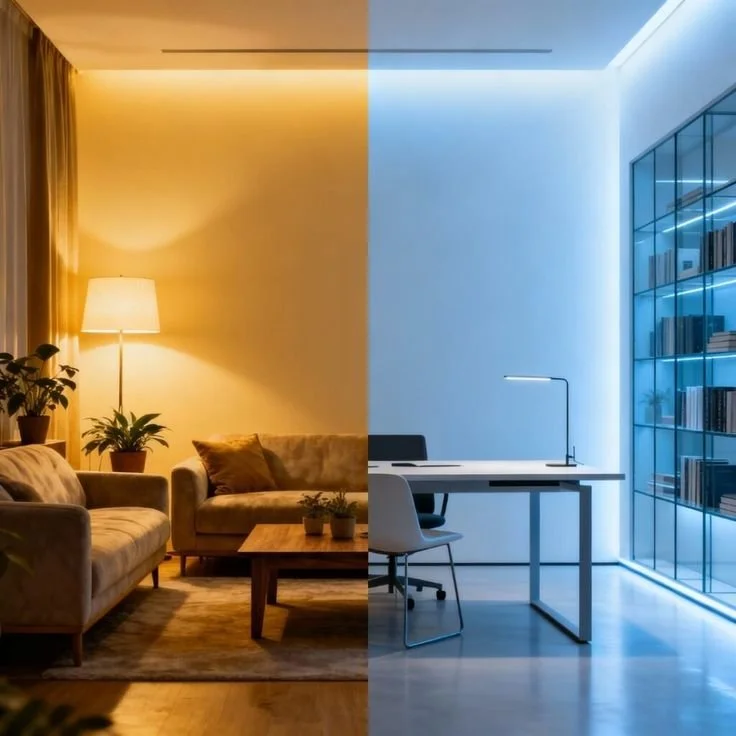
“Your lighting may be damaging your sleep, mood, and metabolism.”
In contemporary environments, lighting is no longer merely visual—it is neurobiological. The human circadian system, once entrained to the solar cycle, now finds itself fragmented by artificial illumination patterns that disregard the body's endogenous rhythms.
The Problem: Misaligned Light, Misaligned Physiology
Human physiology is intrinsically rhythmic. At the center of this rhythm lies melatonin—a hormone produced in the pineal gland, primarily regulated by light exposure. Evening exposure to artificial, blue-rich lighting has been shown to suppress melatonin secretion by up to 80%, according to research from the Harvard Medical School Division of Sleep Medicine.
This suppression impacts far more than sleep. Melatonin modulates immune signaling, metabolic regulation, and neuroendocrine rhythms. When circadian signaling is disrupted, downstream consequences include:
Insomnia and fragmented sleep architecture
Hormonal imbalances, particularly in cortisol and reproductive cycles
Mood disturbances, including depressive and anxious states
Increased risk of metabolic syndrome and Type 2 diabetes
The rise of artificial lighting has transformed what was once a synchronizing environmental input into a subtle but chronic biological stressor.
A New Paradigm: Chronobiological Design
The emerging field of circadian lighting design seeks to realign built environments with the human body's inherent temporal structure. Systems now allow for dynamic spectral tuning—replicating the solar trajectory from cool, blue-rich tones during daytime hours to warmer, red-shifted wavelengths in the evening.
Red and amber light exposure in pre-sleep windows has been shown to preserve melatonin onset and support parasympathetic nervous system activation. Moreover, light zoning by time and function (e.g., workspace vs. rest areas) reinforces internal alignment without behavioral dependence.
In this context, lighting is not decoration—it is intervention.
Designing for Temporal Integrity
Architectural thinking must evolve beyond static spatial form toward temporal resonance. Environments should not merely contain life; they should entrain it—subtly restoring coherence to internal clocks fragmented by industrial lighting practices.
As emerging research in neuroendocrinology, chronobiology, and environmental physiology continues to affirm, light is a primary input to systemic regulation. To ignore its role in building design is to overlook one of the most potent variables in human well-being.
The path forward lies not in aesthetic innovation alone, but in chronobiological alignment—a design ethic grounded in rhythm, coherence, and embodied intelligence.
