
The Hidden Strain of Heat: Rethinking Thermal Comfort as Cognitive Design
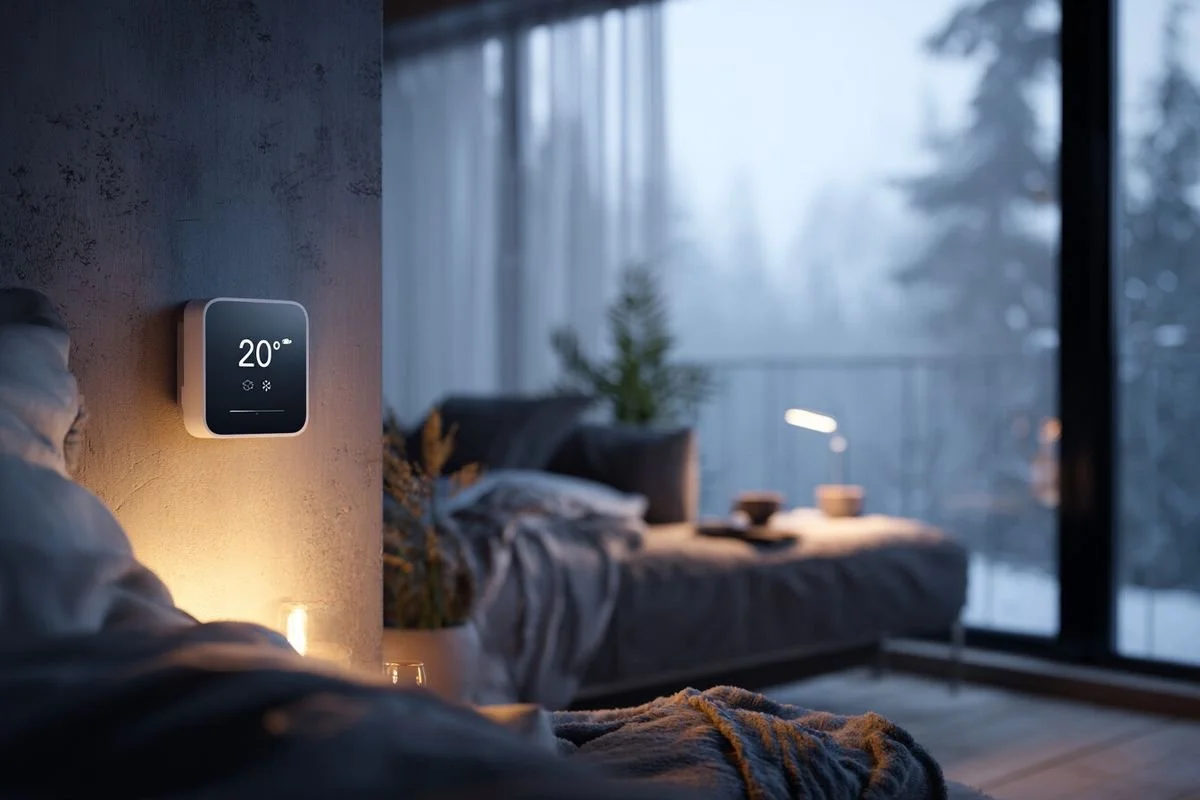
“Thermal discomfort quietly reduces your brain’s performance.”
While light and air have recently entered the conversation of biophilic and health-centered architecture, temperature remains underestimated—a background variable regulated for comfort, not cognition. Yet emerging research reveals a deeper reality: thermal environments directly modulate cognitive function, attention span, and neurological fatigue.
According to a landmark study from Cornell University, productivity can decrease by 2–4% for every degree above 22°C (71.6°F). This is not merely due to physical discomfort—it reflects rising neurometabolic load as the body diverts energy to thermoregulation, drawing resources away from executive brain function.
The Cognitive Cost of Poor Thermal Zoning
Most modern buildings still operate with static, uniform thermal zones—disregarding variations in occupant metabolism, task demands, or circadian phase. The result is:
Chronic overstimulation of the sympathetic nervous system in environments that are slightly too warm or cold
Declines in sustained attention, decision-making accuracy, and working memory
Irritability and fatigue, often misattributed to workload or lighting but rooted in thermophysiological strain
Over time, this low-grade thermal misalignment compounds stress, diminishes performance, and accelerates burnout—especially in knowledge workers and children.
Toward Thermally Intelligent Spaces
The next frontier of design does not simply "heat and cool" spaces—it tunes them. Emerging strategies include:
Passive climate strategies, such as thermal mass, natural shading, and ventilative cooling that reduce mechanical dependency
Radiant heat systems, which create perceptual comfort at lower energy thresholds through localized warmth
Dynamic thermal zoning, allowing occupants to modulate their immediate microclimate based on activity and chronotype
Thermal regulation is not just environmental control—it is neuroarchitectural tuning.
Designing for Neural Efficiency
In an era increasingly defined by cognitive work and digital dependence, the body’s thermal environment becomes a silent co-author of every thought, mood, and decision.
Thermal comfort is no longer just about feeling better—it is about thinking better. It is about ensuring that energy once wasted on thermoregulation is redirected toward memory, creativity, and focus.
To build in harmony with the nervous system is to design with thermal nuance. And in that nuance lies the possibility of effortless cognition—not forced through stimulation, but supported through environmental intelligence.
